
Stories of Women’s Leadership
Across the world, women of faith are responding to the climate crisis with courage, care, and conviction. This Story Hub brings together voices and experiences that show how faith-inspired leadership is healing land, livelihoods, communities, and hearts. Through these stories, we celebrate women’s leadership, share what is working on the ground, and invite deeper collaboration for a more just and sustainable future

From Polluted Ground to Sacred Space
How one Muslim mother in Nairobi is transforming waste, land and community
In Kamukunji, Nairobi, Khadija Atieno Rashid helped transform a polluted and unsafe riverside into a green community space where children play and women gather. Rooted in her Muslim faith and strengthened through cooperation with Christian neighbours, she mobilized women and young people to clean the area, plant trees and restore dignity to a place once associated with neglect.
Through briquette production, urban gardens, tree planting and community savings, Khadija connects environmental action with livelihoods and social care. Her journey shows that faith can be expressed through cleaning a river, reusing waste, growing food and bringing people together. When communities reclaim neglected spaces, they also reclaim confidence, safety and hope.
Khadija Atieno Rashid

Listening to the Cry of the Earth and the Cry of the Poor
How faith, solidarity and community resilience are responding to drought in Kenya
In Kenya, Sister Maryfrances Wangari Sebastian brings together climate justice, peacebuilding and the dignity of marginalized communities. Rooted in Franciscan spirituality, she helped establish the Laudato Si’ Community Centre in Isinya after witnessing how severe drought was destroying livestock, livelihoods and hope among Maasai families.
Through clean water, solar energy, agroecology, women’s livelihood training and interfaith youth engagement, the centre is creating pathways towards long-term resilience. Sister Maryfrances’ story shows that responding to climate crisis requires more than emergency relief. It calls for accompaniment, partnership and solidarity that hears both the cry of the Earth and the cry of the poor.
Sister Maryfrances Wangari Sebastian

Working on Our Piece of the Puzzle
Faith, education and ecological conversion in the schools of Wollongong
In Australia, Beth Riolo helps 38 Catholic schools turn care for creation into sustained action. Guided by Catholic teaching and Benedictine spirituality, she supports school communities to develop long-term environmental plans, form student eco-ambassadors and integrate ecological responsibility into prayer, learning and everyday school life.
From vegetable gardens and recycling systems to habitat restoration and Indigenous bush-tucker gardens, Beth’s work reaches thousands of students and staff. Her story reminds us that climate action does not require one person to solve everything. Hope grows when each of us works faithfully on our own piece of the puzzle while knowing that others are doing the same.
Beth Riolo

Harmony with the Earth, Dignity for Women
Turning faith into grassroots sustainable development in rural India
In Madhya Pradesh, Dr. Janak Palta McGilligan has spent nearly four decades turning Baha’i principles of equality, service and harmony with creation into practical community transformation. Through the Barli Development Institute for Rural Women, she equipped thousands of rural and tribal women with literacy, health knowledge, sustainable farming skills and solar technologies that reduced smoke, deforestation and the burden of collecting firewood.
Today, Janak continues to live what she teaches through zero-waste practices, renewable energy, chemical-free farming and tree planting. Her story shows how development rooted in dignity can empower women, protect ecosystems and allow knowledge to pass naturally from one generation to the next.
Dr. Janak Palta McGilligan

Listening as Climate Justice
How Buddhist humanism and Indigenous knowledge are reshaping climate education in Brazil.
At the University of Campinas in Brazil, Professor Amasa Ferreira Carvalho is reimagining climate education through listening, dignity, and Indigenous leadership. Rooted in Buddhist humanism and her own journey from the Brazilian Amazon, she founded the Indigenous Sustainability Laboratory to support Indigenous engineering students whose territories are already facing climate disruption. Through dialogue, science, and lived experience, the Laboratory creates space for students to be recognized not as victims of climate change, but as knowledge-holders and leaders. For Amasa, climate justice begins when universities listen deeply, honour territorial wisdom, and allow faith to become courageous action for the Earth.
Amasa Ferreira Carvalho

Many Trails, One Mountain
How a small women’s group in Japan is transforming waste, fashion, and faith into community resilience.
At the foot of Mount Fuji, Setsuko Watanabe and the women of Mizuumi are showing how small, consistent acts of care can transform a community. What began as a local effort to reduce household waste has grown into a women-led movement for sustainability, upcycling, microplastics prevention, and interfaith collaboration. Rooted in Buddhist practice and community friendship, their work turns old kimonos into new stories, kitchen waste into collective savings, and environmental action into a shared path of resilience. For Setsuko, there are many trails up the mountain, but the climb toward a sustainable future is one they make together.
Setsuko Watanabe

Caring for Nature as a Spiritual Duty
From Umbanda faith to collective climate action in Recife and beyond
In Recife, Brazil, Rayana Burgos dos Santos is mobilizing Afro-Brazilian terreiro communities to defend nature as sacred and to claim their place in climate justice. Through the Rede de Terreiros pelo Meio Ambiente, created in 2023, she strengthens climate education, advocacy, and a living network of Black women, youth, and faith leaders. Sixteen women across northern and northeastern Brazil are documenting environmental memories as testimony and strategy, while the network’s COP30 communications reached over one million views. Rayana calls faith a “powerful social technology,” shaping values and collective imagination. Her work shows that ancestral spirituality, storytelling, and policy influence can move together; quietly, firmly, and far, for community climate futures.
Rayana Burgos dos Santos

One Family: From Soil to Soul
When we heal the soil, we heal people.
In Eswatini, Sharon Fraizer shows how climate action begins with soil, seeds, and compassion practiced daily. As a volunteer with the Buddhist Compassion Relief Tzu Chi Foundation, she helps lead a community farming and feeding program spanning 40 communities, two farms, and a nursery. The work supports 20 schools, engages more than 1,000 young people, and equips over 1,000 women to grow food and strengthen household resilience. A community-built nursery produced 53,000 seedlings in four months, spreading backyard gardens and hope. Through hospital partnerships and handmade support items, care becomes a network. Sharon’s faith teaches interconnectedness, healing land, and people together. In her words, turning palms, downward means becoming givers.
Sharon Fraizer

Caring for Creation as a Way of Life
Mandisa Gumada’s Faith-Led Climate Work in South Africa
Mandisa Darkie Gumada turns creation care into a way of life. Rooted in worship, lived in daily choices, and shared across generations. Based in Durban and connected to Green Anglicans, she trains church leaders, youth, and women to become “eco-champs,” translating scripture into practical action: reducing single-use plastic, conserving water, planting trees, and growing food. Her work moves through dioceses shaped by floods, drought, and food insecurity, always grounded in local realities. In interfaith spaces, she has learned that environmental care is a common language. Mandisa’s story invites us to see climate action as ministry, everyday, collective, and possible. Her campaigns, from Green Lent to Plastic Free July, widen reach.
Mandisa Darkie Gumada

Forming Guardians of Creation
How faith-based education is shaping a generation to protect biodiversity.
In Australia, Adi Mariana Waqa brings biodiversity and faith into the classroom, forming young guardians of creation. Through the Columban Schools Partnership Programme, she translates Laudato Si’ into accessible, practical learning for primary students. By connecting global ecological realities with local action, she fosters shared responsibility across cultures and continents. Her approach invites dialogue rather than instruction, encouraging children to see environmental care as identity, not obligation. Integrating storytelling, curriculum resources, and cross-cultural exchange, Mariana plants seed of stewardship early. Her leadership demonstrates that lasting climate resilience begins not only in policy or protest, but in formation.
Adi Mariana Waqa

Rooted in Care, Even in Crisis
Faith, land, and ecological hope in Haiti
In Haiti, Marjory Louis-Mard lives ecological conversion as a daily commitment amid instability and loss. As a Laudato Si’ Animator, she supports gardens, youth clubs, and grassroots faith communities dedicated to caring for creation. Despite displacement, violence, and the destruction of nearly everything built, she continues rebuilding step by step. Rooted in Catholic social teaching and interfaith collaboration, her work sustains hope where structures collapse. Through children’s gardens and shared spaces of care, she nurtures resilience that survives crisis. Marjory’s story reminds us that climate action is sometimes quiet persistence, grounded in faith that chooses to continue even after everything is lost.
Marjory Louis-Mard

Growing Forests, Growing Values
How faith, food, and restoration are transforming landscapes and communities in India
Priyanka Pratap Patil restores degraded land through food forests that cultivate both nourishment and values. Guided by Hindu spirituality and the practice of inner transformation, she designs biodiverse ecosystems that regenerate soil, water, and community resilience. Through Sanjeevanam and Golden Era Eco-Services, she supports villages in restoring landscapes while strengthening nutrition, livelihoods, and youth engagement. Her forest model extends beyond agriculture into philosophy, emphasizing collaboration across faith traditions and collective growth. By linking ecological healing with spiritual grounding, Priyanka demonstrates that restoring land also restores dignity, possibility, and hope for communities navigating climate uncertainty.
Priyanka Pratap Patil
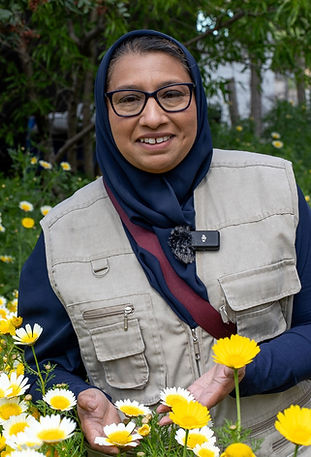
From Faith to Frameworks
How Islamic finance locally led adaptation, and community voices are reshaping climate justice.
Shahin Ashraf MBE works at the intersection of faith, policy, and climate finance to transform how resilience is defined and funded. Through Islamic Relief Worldwide and locally led adaptation efforts in Bangladesh and beyond, she advances climate justice grounded in community voice and ethical finance. By integrating Islamic financial instruments with structural reform, she advocates for systems that prevent vulnerability rather than simply respond to crisis. Her leadership bridges global frameworks and grassroots realities, ensuring women and marginalized communities shape adaptation planning. Shahin’s work demonstrates that faith can influence governance architecture, unlocking resources and reshaping institutions toward equitable climate futures.
Shahin Ashraf MBE

Faith, Trees, and Shared Prosperity
How a Muslim woman in coastal Kenya is restoring land, livelihoods, and dignity through climate-conscious enterprise.
In coastal Kenya, Sister Miswale Zingizi unites faith, enterprise, and environmental stewardship to reshape local economies. Through Kaya Nut and the Mkorosho Initiative, she supports women processors and farmers while advocating for cashew tree conservation and climate-resilient agriculture. Grounded in Islamic principles of Amanah, stewardship, and trust, her leadership challenges systems that separate profit from purpose. By strengthening value chains, restoring trees, and expanding fair access, she builds prosperity that circulates within communities. Her work demonstrates that climate resilience is not only ecological but economic and moral, proving that ethical enterprise can restore dignity while protecting land for future generations.
Sister Miswale Zingizi

Growing Sacred Forests, Growing Future Generations
How the Sikh faith is restoring land, livelihoods, and leadership in India.
In Punjab, Dr. Supreet Kaur leads a faith-rooted environmental movement that transforms reverence into restoration. Through EcoSikh and the Guru Nanak Sacred Forest initiative, she has helped plant thousands of dense native forests that regenerate ecosystems, cool urban landscapes, and strengthen livelihoods. Yet her work extends beyond measurable impact. By framing nature as sacred, she shifts behavior, embedding stewardship within worship, households, and community leadership. Engaging women, youth, and faith institutions across regions, Supreet cultivates ecological awareness as both service and responsibility. Her story reveals how spiritual conviction can shape practical solutions, nurturing resilient communities while growing future generations of environmental guardians.
Dr. Supreet Kaur

Loving the Earth by Caring for People
Cherish all things. Protect the environment and balance ecology.
In Sierra Leone, Margaret Bassie demonstrates that climate action begins with care. Working across urban settlements and rural provinces, she supports flood mitigation, sanitation transformation, agricultural resilience, and long-term community recovery. Rooted in interfaith collaboration and grounded leadership, her work moves beyond emergency response into sustained commitment. Whether cleaning drainage systems, supporting women farmers, or remaining present long after other organizations depart, Margaret embodies climate justice through persistence. Her approach strengthens relationships between people and place, proving that environmental protection is inseparable from dignity, trust, and shared responsibility. In caring for communities, she teaches that caring for the Earth becomes a lived faith practice.
Margaret Bassie

Protecting Mother Earth as an Act of Faith
How Muslim women in Indonesia are turning faith into climate justice and interfaith action
In Indonesia, Sister Hening Parlan mobilises Muslim women and interfaith communities to confront deforestation, coal extraction, and climate injustice. Through initiatives such as Eco-Bhinneka Muhammadiyah and Green Ability, she connects Islamic teaching with environmental protection and collective responsibility. Guided by the belief that harming the Earth is like harming one’s mother, she transforms repentance into restoration. Her work demonstrates how faith-based organising can shift narratives, empower women, and build alliances that protect land, livelihoods, and future generations.
Sister Hening Parlan - Indonesia

Restoring Harmony with Nature
How spiritual consciousness is powering renewable energy, sustainable food systems, and climate leadership in India
Sister Jayanti Kirpalani integrates spiritual consciousness with technological innovation to advance climate leadership in India. From pioneering the India One Solar Thermal Power Project to promoting Sustainable Yogic Agriculture, she links renewable energy, food systems, and inner transformation. For Sister Jayanti, sustainability is not only technical progress but moral alignment with nature. Her work demonstrates how faith traditions can generate large-scale environmental solutions while nurturing individual awareness, interfaith cooperation, and long-term commitment to harmony between people and planet.
Sister Jayanti Kirpalani - India

When Climate Meets Opportunity
Lenah Mwangi’s interdisciplinary approach to climate action through land, skills, and community
In Njoro, Kenya, Lenah Mwangi transforms agriculture into a bridge between climate resilience, youth empowerment, and economic dignity. Through Inuka Agri Solutions, she works with around one thousand farmers and mentors emerging young professionals in climate-smart agriculture and employability skills. Her approach links land restoration with opportunity, ensuring that sustainability strengthens livelihoods rather than limiting them. Grounded in integrity and faith, Lenah demonstrates that climate action is not a single-sector effort but a system connecting food, education, trust, and community leadership.
Lenah Mwangi - Kenya
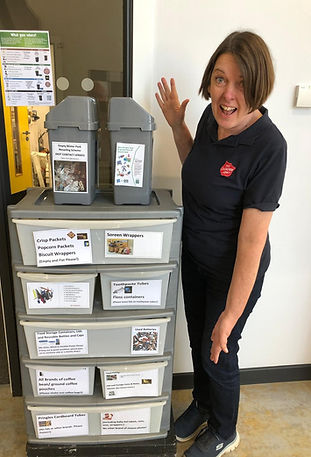
Climate Action in the Small Things
How a South London food bank reduces waste and cares for people
In New Addington, South London, Annette Wicks demonstrates that climate action often begins in ordinary routines. Leading a volunteer-run Salvation Army food bank serving around thirty families weekly, she integrates sustainability into procurement, refill systems, and food choices while protecting dignity. Rooted in faith and shaped by decades of service, including time in Zambia, Annette shows that environmental care does not always look dramatic. Sometimes it looks like thoughtful decisions, reduced waste, and consistent compassion practiced week after week.
Annette Wicks - South London

Falling in Love with the Earth Again
Where the relationship with land becomes an act of faith
In the woodlands of the Forest of Dean, Vivienne Prescott reimagines climate action through relationship rather than rhetoric. As a Salvation Army officer, she tends a three-acre smallholding where women, families, and children reconnect with soil, dignity, and spiritual belonging. For Vivienne, environmental care begins with love—sitting on the land, growing food together, and rediscovering wonder. Her ministry shows that ecological restoration and poverty justice are inseparable, and that faith lived outdoors can transform how communities experience land, hope, and responsibility.
Vivienne Prescott - United Kingdom

Being Co-Creators with God
Irene’s journey in Climate YES.
For Irene Sebastian-Waweru, faith and environmental stewardship have always been deeply intertwined. As part of Climate YES, a youth-led ecumenical movement spanning multiple African countries, Irene helps support young Christians responding to climate change in their own communities. Often working behind the scenes, she contributes to building structures, relationships, and long-term commitment across diverse contexts. Irene’s story reminds us that faith-driven climate action is sustained not only by visible leadership but by consistent care, collaboration, and the quiet work of holding movements together.
Irene Sebastian Waweru - Kenya

Planting Seeds for a Just Future
How Muslim youth leadership and interfaith education are reshaping climate action in Canada.
When Iman Berry speaks about climate action, she begins with faith, justice, and the lived realities of community life. As the co-founder of Green Ummah, she works at the intersection of Islamic ethics, youth leadership, and environmental justice, creating spaces where climate education becomes action. From classrooms to mosques and interfaith coalitions, Iman’s work connects climate care to worship, civic engagement, and systemic change. Her story highlights how faith-rooted education can empower young people to act locally while thinking globally.
Iman Berry - Canada

Faith as Service, Climate Action as Ministry
How a woman of faith is helping rural communities in Uganda adapt, heal, and hope
For Nankwanga Jida, climate action begins with faith, patience, and service. Working across rural communities in Eastern Uganda, she supports families to adapt to climate change through sustainable agriculture, food security, and community resilience. Rooted in the church but reaching far beyond it, her work brings together farmers, schools, and interfaith leaders to respond to climate impacts in practical, dignified ways. Jida’s story shows how faith, when lived as service, can restore land, strengthen communities, and nurture hope over time.
Nankwanga Jida - Uganda

Faith in Action: Meisie's Climate Leadership
How women across Southern Africa are transforming churches into centres of ecological renewal
Across Southern Africa, Meisie Lerutla is mobilising thousands of women to translate faith into environmental stewardship. Through the Mothers’ Union, she nurtures Eco Champions who restore degraded land, strengthen livelihoods, and embed climate awareness within church communities. Her leadership reimagines churches not only as places of worship, but as centres of resilience and ecological responsibility. By equipping women with practical tools and shared purpose, Meisie demonstrates how collective faith can regenerate communities and protect the Earth.
Meisie Lerutla - South Africa

Seeds of Change
How faith-rooted agriculture is restoring land and livelihoods in Kenya
In Kenya, Sister Josephine Kwenga is cultivating change through sustainable agriculture grounded in faith and community leadership. As a leader within the Union of International Superiors General (UISG), she works with women to restore degraded land, strengthen food security, and build resilient livelihoods. Her approach connects spiritual responsibility with practical farming knowledge, ensuring that care for the Earth translates into nourishment for families. Through training, mentorship, and collective action, Sister Josephine demonstrates how faith-led agriculture can regenerate soil, dignity, and hope.
Sister Josephine Kwenga - Kenya